
Manufacturing Readiness Services in Richmond Virginia
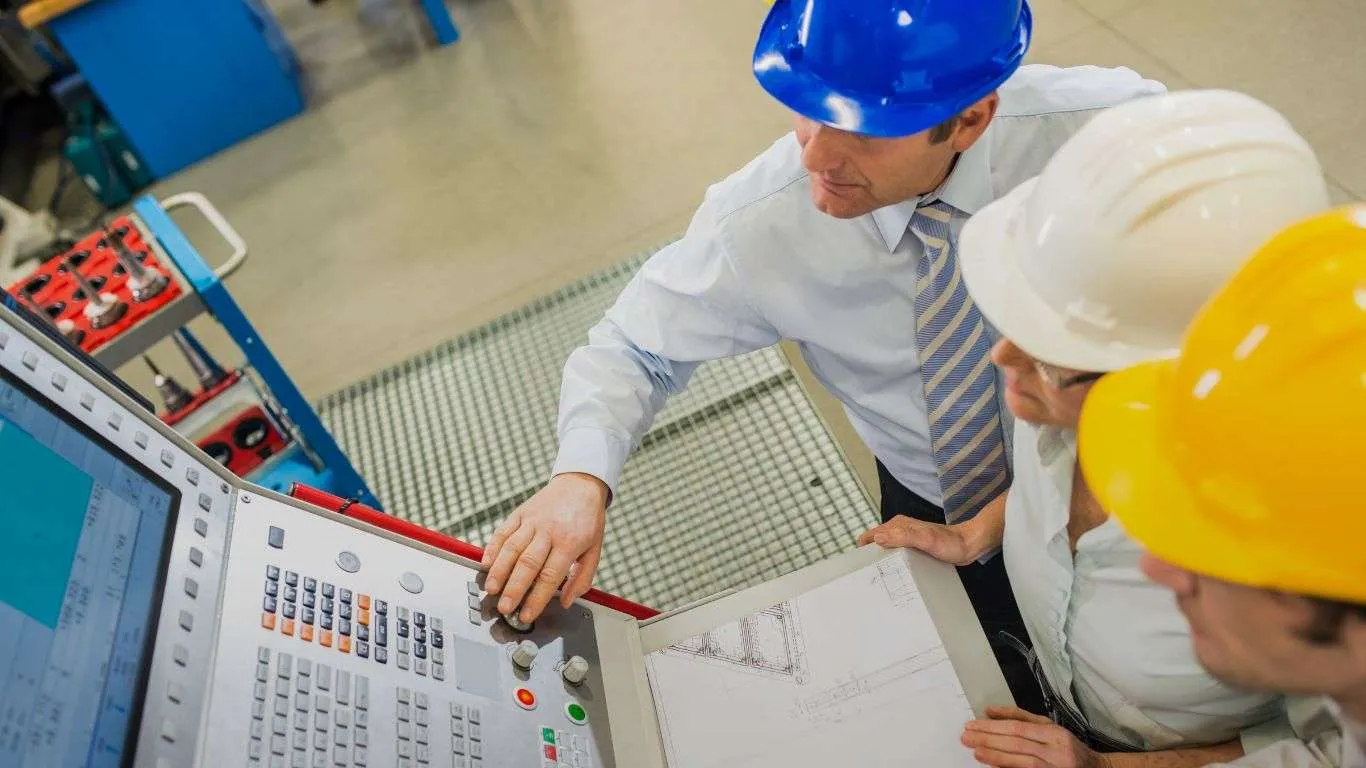
Manufacturing Readiness Services in Richmond Virginia
You have a prototype that works. You have tested it, refined it, and you believe it is ready for production. But “works on a bench” and “ready for a factory” are different standards. Manufacturing readiness is the work of evaluating whether your design, your documentation, your materials, and your production plan are mature enough to commit to tooling, supplier orders, and a production run without unacceptable risk. Inventions Unlimited provides manufacturing readiness support for inventors in Richmond Virginia, reviewing designs for manufacturability, identifying production risks, and helping you close the gaps before money is spent on molds, dies, or minimum order quantities. This page explains what manufacturing readiness actually involves for inventors in Richmond Virginia, what we do and do not do, and how to know when your product is truly ready. For the prototyping phase that precedes this, see our prototype development services page.
What Manufacturing Readiness Actually Means at Inventions Unlimited
The term “manufacturing readiness” gets used loosely. In defense and aerospace contexts, it refers to a formal scale—Manufacturing Readiness Levels (MRLs)—that assesses maturity from basic manufacturing implications (MRL 1) to full-rate production (MRL 10) . That framework is useful for understanding the concept, but most independent inventors do not need a formal MRL assessment. What they need is a practical answer to a simpler question: if I pay for tooling and order a production run, will the parts come out right, at a cost that makes sense, without surprises?
At Inventions Unlimited, manufacturing readiness means reviewing your design through the lens of the production process. That includes design for manufacturing (DFM) analysis—checking tolerances, geometry, materials, and assembly methods against what the intended manufacturing process can actually achieve . It includes supplier and material readiness—confirming that the materials you specified are available in the quantities you need, at a reasonable cost, from sources that will still exist when you reorder. And it includes production planning—documenting what the manufacturer needs to know to build your product correctly. Our How It Works page describes the product finalization step where design is tuned for manufacturing needs, and our small batch manufacturing page explains how a validated design moves into a short production run.
Why Inventors in Richmond Virginia Need This Step Before Committing to Tooling
The most expensive mistake in manufacturing is committing to tooling on an unready design. Injection molds can cost thousands of dollars and are difficult to change once cut. Die casting dies, stamping dies, and custom fixtures carry similar commitments. If the design has a wall thickness that will not fill, a draft angle that will not release, or a tolerance that cannot be held at production speed, you find out after the tooling is paid for—and the tooling cannot be easily fixed.
Manufacturing readiness exists to catch those problems before the commitment. A DFM review flags thin walls, sharp internal corners, undercuts, and features that require special tooling or multiple setups . It identifies tolerances that are tighter than the application requires, which drive up cost without adding value . It checks whether the material you specified is easy to manufacture or difficult, and whether an alternative would perform as well at lower cost. For inventors in Richmond Virginia, the practical value is avoiding a five-figure mistake on a design that was almost ready but not quite. Our prototype manufacturing services page covers the transition from prototype to production-grade build, and our FAQ page addresses common questions about cost and process.

What the Manufacturing Readiness Review Covers
A manufacturing readiness review is not a single checklist. It depends on the manufacturing process—machining, molding, casting, stamping, or assembly—and on the product itself. But for most inventors in Richmond Virginia, the review covers a consistent set of concerns. Geometry is checked for features that are difficult or impossible to manufacture: deep pockets that require specialty tooling, undercuts that require side-actions, wall thickness that is too thin or too uneven. Tolerances are reviewed to distinguish between dimensions that must be tight for function and dimensions that are tight out of habit. Relaxing a non-critical tolerance can often reduce cost significantly without affecting performance .
Materials are evaluated for manufacturability as well as performance. A material that meets the functional requirements but is difficult to machine or mold may drive up cost unnecessarily, and an alternative may perform as well. Assembly is reviewed for ease of putting the product together: whether fasteners are accessible, whether parts can be oriented correctly, whether the sequence makes sense for someone building it repeatedly. Inspection is planned—if a dimension is critical, how will it be measured at production volume? A specification that cannot be checked efficiently in production is a specification that will cause problems . Our services overview lists the manufacturing methods we work with, and our mechanical product design page covers the design engineering that feeds into readiness.
What to Prepare Before You Contact Us From Richmond Virginia
You do not need a polished package, but bringing these shortens the path to a useful review. The CAD files or drawings for the design you intend to manufacture. The manufacturing process you intend to use, if you have decided—injection molding, CNC machining, casting, sheet metal, or another method. The production quantity you are targeting. Any feedback you have received from manufacturers, potential suppliers, or a contract manufacturer. And the specific concerns you have about the design—features you are unsure can be made, tolerances you are unsure about, materials you are unsure will work.
If you are earlier in the process and do not yet have a prototype, our prototype development services page covers the build-and-test phase that precedes readiness review. If you have a prototype and need it built to production-grade standards, our prototype manufacturing services page covers that step. And if you are ready to move into a short production run, our small batch manufacturing page explains how that works.
How the Manufacturing Readiness Process Works From Richmond Virginia
Once you contact us, the process starts with a conversation and an NDA. From there, we review the design against the intended manufacturing process, document the findings, and discuss the recommendations with you. If the review reveals problems—and it usually reveals at least a few—we work with you to revise the design and re-review it. You track progress on the project dashboard and stay involved through scheduled meetings. When the design is ready, we can help you move into a small batch production run or connect you with manufacturing resources.
Most full projects take three to six months to develop, according to our How It Works FAQ. Manufacturing readiness review is typically completed within the later phase of that timeline, with duration depending on the complexity of the design and the number of issues identified. For a specific project, we provide a fixed breakdown after we understand the scope.
Area We Serve
Inventions Unlimited works with inventors across the Southeast from our base in Columbia, South Carolina. If you are outside Richmond Virginia, find your location below:
Related Services
Manufacturing readiness often leads directly to production. Depending on your needs, you may also require:
-
Small batch manufacturing to produce initial units for market testing .
-
Prototype testing services to validate your design before refining it for production.
-
Mechanical product design to resolve structural or mechanical issues identified during the readiness review.
-
Product development services for end-to-end support from concept through production .
Frequently Asked Questions
Do you sign an NDA before reviewing my design?
Yes. Before we discuss your project in detail, we sign a Non-Disclosure Agreement to protect your intellectual property .
What is the difference between a prototype and a production-ready design?
A prototype is built to prove the concept works. A production-ready design is optimized for efficient, cost-effective manufacturing at scale. Manufacturing readiness services bridge the gap between the two.
Can you help if I already have a manufacturer?
Yes. We can work with your existing manufacturer to review their feedback and refine your design to meet their production requirements.
How long does a manufacturing readiness review take?
The timeline depends on the complexity of your design and the scope of changes required. Contact us to discuss your project and we can provide an estimate.
Ready to Prepare Your Design for Manufacturing in Richmond Virginia?
Our 3D CAD Design services can breathe life into your ideas. Book a Free Consultation today to discuss how we can transform your vision into a powerful 3D model. Let’s explore the possibilities together!
The following page provides the complete list of our invention development service offerings.